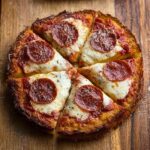
Description
This classic pizza crust recipe yields a tender, chewy base perfect for any homemade pizza. The dough is made from simple pantry ingredients and requires only basic preparation steps. It features a yeasted dough that rises to create a light texture, offering the perfect foundation for your favorite toppings.
Ingredients
Scale
Dry Ingredients
- 3 ½ cups all-purpose flour
- 1 tsp salt
- 1 tsp sugar
- 1 packet (2 ¼ tsp) active dry yeast
Wet Ingredients
- 1 ¼ cups warm water (about 110°F)
- 2 tbsp olive oil
Instructions
- Activate the yeast: In a small bowl, mix the warm water and sugar. Sprinkle the active dry yeast on top and let it sit for 5-10 minutes until it becomes foamy, indicating that the yeast is active.
- Mix dry ingredients: In a large bowl, whisk together the all-purpose flour and salt to evenly distribute the salt in the flour.
- Combine wet and dry: Pour the foamy yeast mixture and olive oil into the bowl with the flour and salt. Stir the ingredients together until they begin to form a cohesive dough.
- Knead the dough: Transfer the dough onto a floured surface and knead it for 8-10 minutes until the dough is smooth, elastic, and no longer sticky.
- Let it rise: Place the kneaded dough in a greased bowl, cover it with a clean cloth or plastic wrap, and leave it in a warm area for about an hour until it doubles in size.
- Shape the crust: After the dough has risen, punch it down to release air bubbles. Roll the dough out on parchment paper or directly onto a pizza stone to your preferred thickness, preparing it for toppings and baking.
Notes
- Ensure the water is warm but not hot to properly activate the yeast.
- Kneading thoroughly is essential for gluten development which gives the crust its chewiness.
- Allowing the dough to rise in a warm environment helps it to double in size and improves texture.
- You can refrigerate the dough after kneading if not using immediately, allow it to come back to room temperature before shaping.
- Use a pizza stone or preheated baking sheet for best results when baking the pizza crust.